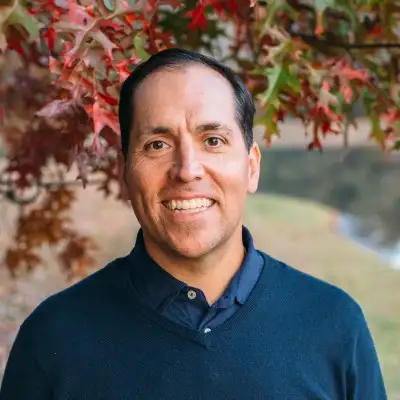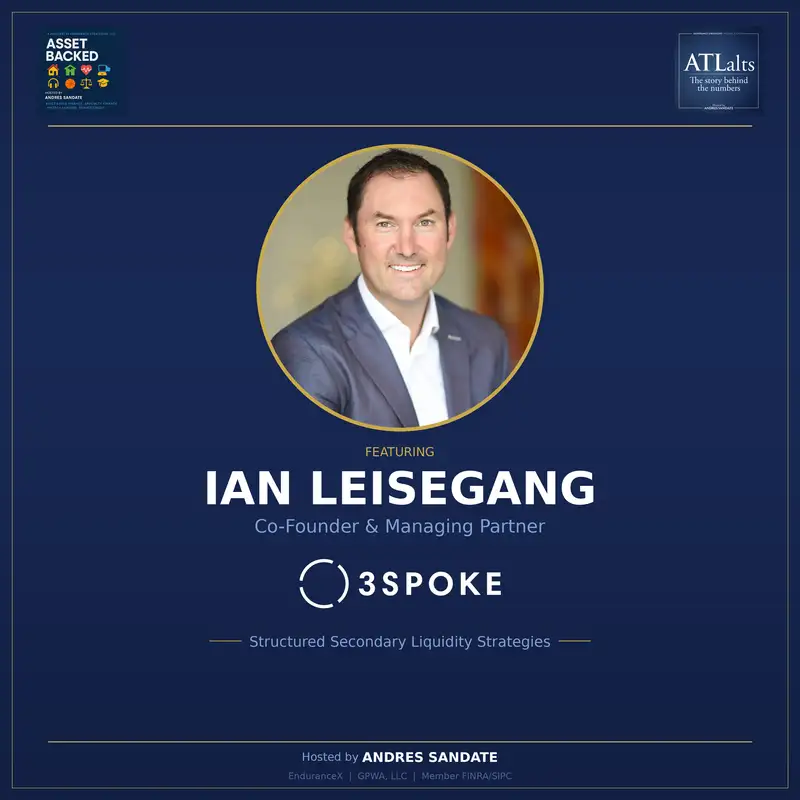
Venture capital with Half the Risk, a conversation with Ian Leisegang of 3Spoke Capital
I'd like to welcome all my listeners and guests to another episode of Asset Backed and ATL Alts. We're doing a special dual recording today, and my guest is Ian Leisegang, the managing partner of 3Spoke. We're gonna talk about, growth equity, late stage venture investing, and a very unique and what I believe novel approach that 3Spoke takes to this, this asset class in the space. And I think advisers and family offices and other investors that are listening in will be, will will be treated, by Ian to a a real master class in this space. So with that, Ian, welcome to the ATL Alts and Asset Backed podcast.
Ian Leisegang:Yeah. Andres, I appreciate the the introduction. Happy to be here, trusting that the conversation will be of some value to to your listeners, and and excited to share what I can in terms of our perspective on the subject of the market that we that we participate in and, you know, help hopefully helpful and answer any questions or specific questions that you have.
Andres Sandate:Yeah. I think it's gonna be a a real treat. I've I've spent some time preparing over the last few weeks. Why don't you start by giving us some background, about 3Spoke? Obviously, it'd be great to to to learn a little bit more about your professional background, to get started.
Ian Leisegang:Yeah. Happy to. So why don't I sort of quick comment around 3Spoke in terms of how long we've been around, then I'll shift to my background and then how we sort of, you know, got together in terms of starting 3Spoke. So so 3Spoke's been around in some form or another, you know, since, you know, the early two two thousand and ten, two thousand twelve time frame. So, yeah, we we tend to have, you know, about ten to fourteen, fifteen years of experience in this specific sector, and and we would argue that we're probably the pioneers in this space.
Ian Leisegang:And so we've we've seen it through multiple cycles, and and it's only accelerating in terms of what we're seeing today. So we'll talk a little bit more about that. How did I get here? My background is the accent is you know, as I've shared before, it's it's it's not East Coast. This is not a Boston accent.
Ian Leisegang:I I grew up in South Africa, and so I I spent, you know, most of my childhood there. And I I ended up going to college. I studied accounting and business. I finished, you know, sort of as a CPA after being at Ernst and Young. In those days, we did three years of auditing, doing auditing across, you know, mostly private and public companies across across industry sectors, decided that, well, that's a great profession.
Ian Leisegang:It wasn't what I wanted to spend my time doing, and I'd never traveled internationally. And so I decided that it was my opportunity to to travel, and I decided to go to London. And in London, I spent about two years fortunately, on the derivative desks of some of the largest investment banks in the world that that people would be familiar with. So I spent some time at CIBC and Merrill and, you know, sort of Credit Suisse, I think I mentioned. So it got an interesting perspective on the financial markets by working sort of pretty closely with the traders.
Ian Leisegang:And that I did for about two years. It was an interesting time. It was just sort of '90 that was around '97, '98 through 2000, and as we all know, the it was y two k for anybody who's old enough to remember that. And at the same time, the derivatives markets were starting to to explode, and and there was a lot of sort of uncharted territory. So it was a very, very interesting time.
Ian Leisegang:At the same time, it was the tech bubble, and I've always had some kind of entrepreneurial spirit. And I will I had a sort of a roommate of mine who we always talked about starting a business, and so I decided it was an opportune time to go back to South Africa and angel fund a business. And so I started from scratch a business. We angel funded it and ended up running it for about, I don't know, six to eight years before I exited that business and and ended up at Deutsche Bank in the derivatives market and helping to to grow the the derivatives business at at Deutsche Bank in South Africa, and we did a lot of different things there. We did ETFs.
Ian Leisegang:We did a lot of structured products. We did we we launched and and and market made, yes, vanilla and exotic options. So it was a very interesting time and and and exciting for me. And then after about two years there, we decided as a family, my wife and I, that we we wanted to to to move for various reasons. We love South Africa.
Ian Leisegang:It's a fantastic place, but there were a couple of things that from a family perspective, we decided that we wanted to to move, and we chose The US. And we specifically chose San Diego and and then had to figure out a way to get here as well as to be able to support the family. And that sort of ended up in me transitioning into the private bank and ended up in Orange County in in Southern California. And and I've been there ever since from a from a sort of logistics perspective. And and then, you know, I was there for a number of years and and transitioned to JPMorgan.
Ian Leisegang:And and at that time, after sort of that was about eight year stint, I I met my partner now today, Steve. And and this was the beginning of 3Spoke. And and the beginning of 3Spoke is Steve and I did a deal together. And I had a I was in the private banking world covering some of the wealthiest families in the, you know, TMT or technology media and telecom sectors in Southern California, you know, Southwest Region of The US, and and there was somebody looking for liquidity. They had a lot of stock.
Ian Leisegang:We were running a dual track IPO and and strategic sale for the business, but he needed some liquidity prior to that event, and we were trying to find a solution. And nobody existed. It couldn't be done. It was just mind blowing for me that this business that was gonna go public, where we couldn't find a solution for $2,000,000 of liquidity for a six month period. And we did the deal.
Ian Leisegang:Steve and I did it together. It was out of the first fund second fund of of of what 3Spoke is today, And it was a fantastic deal. It worked fantastically for the for the for for my clients at the time. He got his so something sold, and and it was a great result for fund two. And we can talk more specifically about that.
Ian Leisegang:But that was the that was the start of 3Spoke. So that's the the background. Let me just pause there, see if there's anything else there, and and then we can talk a little bit about the evolution of 3Spoke if you like.
Andres Sandate:Yeah. Well, I I mean, you know, it's not a bad place to land in the in The US if if, you know, if you set up shop in in San Diego, and then, you know, you migrate to Orange County. So I can, I can imagine why your you and your family might not wanna leave that part of the country having family there as well? It's a it's a beautiful place. No.
Andres Sandate:That's a great background. It's a it's a great backstory. I mean, one of the things we we love about doing this for our guests is to get the backstory. Right? For, a lot of times, an asset management organization, people think it's just numbers, and they think that the numbers, you know, produce, you know, money and results and and returns.
Andres Sandate:And and at the end of the day, it's people that drive the business and its relationships, that power our industry as much as technology and AI and all these other things that, know, make things make maybe more efficient. It is still a people and relationship and as we say sort of, you know, human capital. So really cool that you and Steve connected. It sounds like you were the private banker advising a client that had, a need for liquidity and Steve being, you know, one of the pioneers as you mentioned, which you're now part of 3Spoke, right, moving to the GP or asset management side of the business. You guys really were early, in in creating a solution, which we definitely wanna dive into because we have a lot of private bankers and RIAs and people in private wealth.
Andres Sandate:They might be listening to our show and thinking, oh, great. Another GP that's gonna talk about this really wonderful asset class. I think we have an opportunity to really actually empower them with something different, which is not only learn about an asset class, you know, in this case, structured secondaries, late stage venture growth equity, but also adding a tool to the toolkit if you're in private wealth and you have clients that have concentrated positions of, you know, maybe illiquid, shares. So we're gonna dive into that. What I'd love to do is, you know, allow you to sort of frame up, you know, where 3Spoke, where you all compete.
Andres Sandate:And and I'm gonna read a little bit of what you provided to me, and then I'm gonna let you maybe just take it, to the second and third, degree. So 3Spoke, as you wrote, provides an alternative to a direct secondary sale of late stage venture assets across employees at venture backed firms as well as entire portfolio of interest with limited and general partners. Now I don't know about you, but our audience is again, it's a lot of sophisticated folks, a lot of people in the institutional, but also the private wealth space. When I hear secondaries and I hear late stage venture and I hear venture backed firms, These are things I think we can get our arms around. But what you guys are doing is something that's a little bit different, a little bit unique, and you're calling it structured secondaries for these late stage venture and growth equity companies.
Andres Sandate:So maybe you could unpack what that is.
Ian Leisegang:Sure. Yeah. It it's definitely a word salad, whereas we try and succinctly touch on all the different aspects to where we're trying to focus in the market. So so let me let me take two tacks. One one which is just sort of in the broader industry sector where we play, and then and then we can talk specifically about our use case and and, you know, where where we actually, you know, sort of who our counterparties are, what what problem are we trying to solve so we can spend a little bit of time on that.
Ian Leisegang:Because that that's ultimately what I think is what's important for the private bankers is that when I came to this business, I think most entrepreneurs, maybe not the only reason, but the best businesses are ones that solve a problem. And if you can solve somebody's problem, they probably will pay you some money to do it, and and that's what we were trying to do. We were trying to solve a problem that didn't have a solution. And so we'll talk a bit more about that in terms of how we did that. But but just in terms of sort of top down, as you mentioned, the the audience is probably familiar.
Ian Leisegang:So there's you know, if we think about asset classes, there is, broadly speaking, equity, debt, and maybe alternatives. Alright? And and we we tend to focus our interest in the equity space and the alternative space. Although the way we structure it, which we'll get to, actually has features of debt. And so this is one of the biggest problems we've had is is that our business is actually a hybrid.
Ian Leisegang:It actually crosses equity, debt, and alts. And one of the the the hardest things that we've had is growing our business, which is we have to grow a business as as much as any other entrepreneur, is actually explaining this and get this into the asset allocations in large institutional asset managers and and RIAs, like registered investment advisers, because they all wanna put it in a bucket because they've got an asset allocation. And this is the hardest part for us is that we actually cross over most of these. But if you had to narrow it down, most of the risk is probably equity like risk, which we'll get into. And so equity, and and it's private risk.
Ian Leisegang:So once you get into equity land, you know, you generally think about markets as public markets where there's an active market and then private markets, but we tend to operate in the private markets. And when you think about private markets and you think about equity, you think about these businesses that we're investing in, you know, you tend to think of our businesses in two broad buckets. Right? You think of them as profitable or not profitable or cash flow positive or not cash flow positive. You know, the ones that are not cash flow positive generally fit into what we would call venture.
Ian Leisegang:Right? Venture. There's obviously early stage and late stage venture, which we'll talk about. And then you get into sort of more private equity, right, which is things that are cash flow positive or profitable. So from our perspective, we actually think about where we focus in late stage venture and early stage private equity.
Ian Leisegang:So we define this category as sort of growth equity because it's these businesses that are you know, you can't really price them off EBITDA yet because they haven't generated it yet to profitability. But they they they still may be burning a lot of money. They're burning cash, but this is because there's a massive market opportunity. Right? And it makes more sense for them to spend dollars to own market share than it does to just try and generate a profit, right, and lose out on the opportunity set.
Ian Leisegang:So this is broadly where we where we spend our time is in this growth equity crossover between late stage venture and early stage private equity. So that's where we spend our time. And then as you think about that sector and taking the reason we like that sector, which is maybe I'll I'll pause it. I'll I'll talk about that later in terms of an asset allocation and why you would wanna invest in that sector, but just let's keep it high level for now, which is and then and then we focus on what we would call secondaries. Right?
Ian Leisegang:And and secondaries haven't always been that well received by the market. It's been exciting for us as being one of the market participants in growing acceptance of the secondaries market and its use case. So it's, again, a longer conversation. But there are direct investments, so the institutional investors that invest directly in series a rounds or b rounds or c rounds, etcetera. And then there are secondaries investors who buy and sell the shares of these investors, the series a, b, or common shareholders in these companies, where we focus primarily on the secondaries world.
Ian Leisegang:I I would highlight that our business is evolving because we do what I will define in a minute, structured liquidity, is that it means that we have to be flexible. And so while we do secondaries, we do also do primary round commitments, and we will also be a buyer in certain situations as a direct secondary. So just we'll talk about that in a minute. But, generally, secondaries is our focus, and that's where we we wanna differentiate, and that's why investors give us their money. And then the last piece of that high level is is what we define, as you mentioned, structured secondaries.
Ian Leisegang:And so generally speaking, the a a broad definition of a direct secondary is where there's a buyer and a seller. Right? So somebody comes and says, I've got x number. I've got a 100 shares in in SpaceX, you know, in whatever business that I'm interested in, and and I wanna sell it. And and now you and the buyer and the seller have to agree on a price.
Ian Leisegang:Alright? And the only way a deal gets done is is if you both agree on a price, the the the seller sells and the buyer buys. Now the seller's out of the company, the buyer owns whatever the risk is on the company going forward, whether that's, you know, it's profit or loss. So this is one option. What we do is something different.
Ian Leisegang:We do structured secondaries where the person doesn't sell and we don't buy. What we do is we agree to provide this person or this institution with liquidity against their position. And so and in in exchange for this liquidity, we share in some kind of economics. Okay? So this is and I'm gonna expand on that because that's the second piece.
Ian Leisegang:So first piece you asked me, like, when you said, what do we actually do at 3Spoke? Well, top down, we operate in the sector. Right? Private markets, inside the private markets, growth equity. Growth equity, you know, think about we operate in secondaries, not primaries.
Ian Leisegang:And within the secondaries then, we tend to focus the majority of our deployed capital in structured secondaries, although we do some other things as well. So that's sort of top down. Sort I of pause there before I talk about what we actually do on the structured secondary side and
Andres Sandate:see if that made sense. Yeah. It did. It did. And and I think, you know, one of the things about doing these conversations versus I meet so many GPs that are asset managers.
Andres Sandate:And for those that are out there, I I I would encourage you to think about the podcast format as an opportunity to tell your story. I know that I let off by saying our business is a people business. It's about relationships. It's amazing what you can do when you get an opportunity and a platform to really tell your story, and that's one of the reasons why we started this. It's not for us and what we're doing.
Andres Sandate:It's really for emerging and under the radar and and what I believe are niche and specialist alternative asset managers and private markets managers who are doing things that are very, very interesting and can be very, very profitable to ultimately the end client. Right? Now one of the things we're limited with in the podcast because it's not a private, you know, conversation, it's out there, is we can't talk in too much depth about securities and funds, and we don't offer investment advice. But we can do, I think, is spend forty five minutes talking from the standpoint of an asset class and education and framing up a conversation. And then we've created a platform, EnduranceX, for people that wanna learn more to to dive deeper.
Andres Sandate:So I wanna continue on with, with what you outlined, and I think it's super helpful the way you'd, ex explained it, Ian, in terms of what problem are you solving. So you're providing liquidity to ultimately somebody on the other end who likely owns, let's say, shares in one of these, let's say, private companies. It's in that side of the the bucket. It's not a public company. It's a private company.
Andres Sandate:They own shares. They could be common shares. They could be preferred shares. I can point people to the other podcast you did so that we don't have to go through that. But the summation is know what you own, know what your rights are with those shares.
Andres Sandate:For the sake of time, you're focused on those private companies. And I just wanna throw I I would love for you to throw out or maybe offer. They're not necessarily names that you guys have transacted with. The the big ones that people would know of today would be companies like SpaceX. Right?
Andres Sandate:Mhmm. That's a big company that's been in the news, not earth shattering, that they're talking about an IPO in 2026, maybe 2027. Right? That's an example of a growing pre IPO company. Maybe you could offer, you know, a couple of other names for our audience in terms of, again, not necessarily ones you've worked with, but just ones that people would would recognize.
Andres Sandate:And then use that as an example of there's an executive probably working there or there's a venture fund who's owned those shares for a long time.
Ian Leisegang:Mhmm.
Andres Sandate:And, you know, they gotta pay for college or they have to fund a a co GP investment or they have a liquidity need. But I'd love to hear you explain it rather than our audience listen to me because
Ian Leisegang:Mhmm.
Andres Sandate:You guys are the experts.
Ian Leisegang:Yeah. So let let me provide you a couple names that the audience would recognize. And as a general rule, most of the names people recognize are more sort of consumer orientated or some of the most successful businesses in the market just because that's what they're familiar with. So if through our we're we're investing sort of, as I mentioned, since sort of February area. And and so through that span, we're we're raising our sort of full fund.
Ian Leisegang:We're not gonna talk about that, but we through this, we've invested in a couple of companies. So by way of example, companies people would know. Like, we've had DocuSign, Airbnb, Uber. You know, these are a couple of, like, some of the legacy the first really big venture backed institutional venture backed companies that ultimately went public and that everybody has used probably at least once or at least know somebody who's used their services. So these are the kind of companies that we've invested in in the past.
Ian Leisegang:Currently in the portfolio or more recently, you know, we in our portfolio companies like Canva, which is arguably being one of the biggest and most successful Australian venture backed companies and and if not one of the biggest, you know, market things. We we have businesses like Databricks in the portfolio. For for the audience, they they're in the private bank and wealth space. They might know the brokerage platforms that are out there. So, like, we have an exposure to eToro, which is a European based sort of, you know, brokerage platform.
Ian Leisegang:So so our goal here and the reason I give you a couple of these names that that we have exposure to is our goal is to provide our investors with access to the fastest growing and most successful companies in the world. And as a general rule, and this is the longer conversation around asset allocation, is that we all start to appreciate with the amount of money that's been raised in the private markets. There is some of these companies that used to go public when they needed big dollars in order to scale their business to the next level. Many of these companies are staying private for much, much longer than ever before and being supported. And so to the extent that you want to get access as an investor to these companies in your portfolio, if you wait until they go public, you're missing out on probably the fastest and most attractive part of the enterprise value appreciation cycle.
Ian Leisegang:And so to the extent that you're a sophisticated investor, you're missing out if you're not accessing this private market space. The question is, how are you gonna do it, and how are you gonna do it in a a great risk adjusted return way? So this is a longer conversation. But those those are the companies.
Andres Sandate:Yeah. No. Those are great. I mean, those those are great examples. And I I think as we, you know, continue to filter in, right, on these conversations, right, there's so much material to to cover, and and, we talked about this in sort of the preshow.
Andres Sandate:What we wanna do is, you know, is is have this conversation to help, you know, the folks that are in our audience better understand what are the different what are the different areas in alternatives, you know, that most people are hearing about today. It's probably private credit. Right? It it four years ago, it was venture because everybody five years ago, was venture. Everybody wanted to get into these hot, you know, pre IPO companies.
Andres Sandate:It was crypto for, you know, for a minute. And that's the nature of the capital markets. Right? That things that were very, very in demand, you know, three or four years ago, it'd be hard to probably get a lot of people interested in the direct lending middle market business that's lending to enterprise software today. I mean, it it's happening.
Andres Sandate:Loans are being made. Investments are coming in. I'm not saying that the whole space is going to go to zero, but that's the nature of it. So secondaries, as a as an asset class has begun to be talked about in the private wealth space. But when people hear about secondaries, typically, they're hearing about secondaries in the form of a GP, a fund manager, that is buying interest in other funds, and they're they're they're they're they're compiling a portfolio of whether it's private equity secondaries or it's venture secondaries or it's, you know, private credit secondaries.
Andres Sandate:And there's some very well known, very well regarded secondaries managers out there. They're now creating solutions for the private wealth space. That's not what you're doing.
Ian Leisegang:Yeah.
Andres Sandate:That's not what you're doing. And so I I wanna give you guys an opportunity at 3Spoke to to sort of draw the distinction. Yep. There's there's there's, you know, secondaries that would be through a fund approach, and then there's secondaries where you're going more, you know, would you say direct or you're you're you're doing a transaction with a potential seller. So I know that's a long question, but I I think it's important to help to set it up for the private wealth space, the family office that says, oh, these guys are just another secondary's platform, because it isn't.
Andres Sandate:And that's one of the reasons why I wanted you to come on the show.
Ian Leisegang:Yeah. Yeah. So so thanks. And let's segue go back to the previous conversation, which was I tried to give you sort of a top down and where we fit in and then sort of bottom up in what we actually do and where the value proposition is. So let's talk about that.
Ian Leisegang:So let me start by talking about some use cases, and then I'll talk about the value proposition to our counterparties, the people looking for liquidity, and then to our investors that the the RIAs are looking to invest in this asset class. So let me spend a couple minutes on on each one of those. So the use cases are important. Use cases, to your point, we think about it in single asset risk where the underlying risk that we're investing in is one company. So in my example, let's say, like, know, like Databricks as an example, or or or multi asset where there's a portfolio of assets where there's more than one asset.
Ian Leisegang:You know, there could be five. There could be ten, fifteen. It doesn't matter. Multi asset risk. And in each one of these use cases, the solutions are are the same.
Ian Leisegang:The people who own these assets, they could go and sell them if they need some liquidity. But if they sell them, the the biggest cost to them, even if they can agree on a price they like, is that if that business they think is going to double or triple in value over the next three to five years, they are going to forfeit all of that upside. They're gonna lose out on all of that upside for the trade to get some liquidity today. Now this is a very, very expensive decision. Right?
Ian Leisegang:It is the most expensive decision. In addition is when they generally speaking, depends on the user. We're not tax advisers. But, generally, when you sell something, there is a taxable event. And so you think you're gonna get if you sell it for a $100, you think you get a $100.
Ian Leisegang:Well, you don't. You've gotta get the after tax amount, so you get less than what you think. So this this this this this creates a very big and important decision for a current owner of an asset to to to to to go and make a direct sell. What we do in either of these single asset or multi asset solutions is we provide somebody what looks like a loan. It is not a loan.
Ian Leisegang:It is not structured as a loan. It's equity. But what we do is we say to him, look. You know, if you have if you have a $100 worth of of value, right, in this portfolio of assets or in a single company that you own and you want some liquidity, rather than you know, assuming there's a discount that you have to take in the markets depending on whether that's a longer conversation, maybe you can only get 70 or $60. So instead of getting a 100 on where the value is based on the last round or market reference, maybe you can only sell it for 60 or 70.
Ian Leisegang:You gotta pay some brokerage fees, etcetera. So you're only gonna get out maybe $60, and you gotta pay taxes. So all net net of all of this, you you're not coming out with, you know, maybe more than $50 of your $100 value that you have. And, again, every situation different. Right?
Ian Leisegang:So caveats there. But our proposal to them is, look. As a general rule, come to us. Give us the $100 of what you think is value, and we are not gonna buy it from you. We're gonna provide you an advance against that value today.
Ian Leisegang:So maybe we give you $30. Maybe we give you $40. Maybe we even give you $50. It depends on the risk in that company or that portfolio. But we're gonna give you an advance today.
Ian Leisegang:When we give you this advance, as a general rule, again, all individuals and transactions are different, maybe it's not a taxable event. And so you get all this liquidity today, and you can now go do something with it. You can go reinvest it. You can pay money for the kids, put it in a trust. You you can do whatever you would need to do.
Ian Leisegang:Diversify diversify your risk for your private you know, wealth clients, the RIAs. One of the biggest things is they're telling their clients probably, hey. You've got a massive concentrated position in this company. You should be diversifying and giving us that money to go and put in a diversified portfolio. So if something goes wrong, you don't lose it all.
Ian Leisegang:Well, maybe that's what you do with the the liquidity. Regardless of what you do with it, we will give you maybe not as much as you could get in a sale, but we're gonna give you a significant portion of liquidity that's gonna solve your initial liquidity need that you're trying to solve for today, but you didn't have to sell. And what now what happens is we, with our sort of this person looking for liquidity, we now become joint venture partners for want of a better term through to a exit on this company. So let's assume this company is gonna go public. It's a company that's doing well enough.
Ian Leisegang:It's big enough. The scale is big enough. It can go public. Generally, you would be able to then get liquidity in the stock once the lockup comes off and you go public. Right?
Ian Leisegang:And you can sell the shares. Well, we're giving you the liquidity today, but we are gonna now joint venture with you all the way through to this liquidity event. And so now in this interim period, we're gonna charge you for this risk that we're taking on the company and for this joint venture relationship. We're gonna partner with you in the equity value, so we're gonna take some participation. We are generally a minority owner of the equity, so the individual is a majority owner.
Ian Leisegang:They get to keep the majority of their shares and the majority of the upside of the shares. In some cases, or or interest in in a fund if that's what they want. And then and then we might charge them what looks like some kind of what the the it's a pick interest, right, accruing and compounding. Like, there might be some kind of investment return, like, time based investment return for the longer that we have it. Sometimes we do that.
Ian Leisegang:There might be some fees and expenses. But net net, we're going to charge them and joint venture with them through liquidity, and they then get to participate in the upside of the growth from that additional two to three to four x. And this then solves the problem of them giving up and forfeiting all this upside. And so as a general rule, the last thing I'll say there for a minute is the the counterparties, the people that come to us first gonna sell, as a general rule, are the people that love the asset that they own, love it. They don't wanna sell it because they think it's gonna double or triple in value in the next five years or so, but they need liquidity today.
Ian Leisegang:And if they sell, they forfeit all of that. They come to us because they want a liquidity solution. This is our this is our solution to the market. Don't sell. Get some liquidity.
Ian Leisegang:Partner and let us share in the equity upside with you. So that's generally what we do and the value proposition. And and and the last thing I'd say there is the use cases for this are generally people, as you mentioned, who have common or preferred shares in these companies, or they have options who they these options need to be exercised or they lose them or there's a there's a tax benefit to doing it today, and we provide the the the the the strike price and the tax. This is that are due the the the money for the taxes and the strike. So we do this.
Ian Leisegang:And then in that's in the single asset space. In the multi asset space, people might have an LP. They might have made a commitment to a fund manager, venture capital fund, and they've been in it for ten ten years, and they want some liquidity. We'll take the interest in this fund. Or if they're a general partner, and we we we probably have a little niche in this space, we're probably one of the managers out there that provide general partners advances against their carried interest because they don't wanna sell because they're managing it on behalf of their their their investors, but they also have liquidity needs in their personal and in their business in their business, and we provide an advance against the carry.
Ian Leisegang:So so we we do that for both the general partners. And then the bigger and more, you know, trend is is GP led secondaries, which is the general partner's got a fund, and he's trying to or they are trying to create liquidity for their investors, and they can they can provide either one or many assets in their portfolio, and we can provide an advance against those to create some some DPI or distributions, you know, to the the investors in those funds. So this is the use case. That that was a lot. So let me just sort of pause for a minute there, but that that's generally our value proposition.
Andres Sandate:Yeah. I I mean, I I think it's great. I there are a lot of different use cases, which is, which is important that you outline them. You know, it's so funny because we we we we that have been in the industry long enough, we can probably go back to the period, of the GFC in in o eight. And, you know, I I had the good fortune of starting my career as a as a banker working in the capital markets for the first five years of my career.
Andres Sandate:And, you know, while some of my friends were off doing the equity and m and a and maybe more on on the surface, you know, the more exotic areas or the more interesting areas, I guess, as a young analyst or associate doing transactions, I was on the credit side. I was on the debt side. And, you know, I look back on twenty years and I realized just how blessed and fortunate I was to really have a grounding and a foundation in in the debt capital markets and realize that credit really makes this thing work. Right? Liquidity makes this thing work.
Andres Sandate:And I can point back to so many conversations that I've had over the twenty years. And at the end of the day, I guess, I just I don't know if it was good fortune or what, but having an opportunity to meet you guys and a shout out to one of your managing directors, Craig White, for connecting us who's also based in Atlanta. But one of the things that we talked about is I said, Craig, why don't more folks know about this? Because I could see, you know, why people would wanna understand, you know, how they could participate in some of these big well known pre IPO companies. But you just outlined and just offered a way for private bankers and and RIAs who have clients who work at some of these companies or they have GPs who are managing venture funds and they wanna raise another fund, you just you just outlined a tool that some of them may not even be aware that they could be approaching their clients with.
Andres Sandate:And I can speak from experience, and this is why I was so excited to do the show. A partner and I wanted to go out and and acquire pre IPO shares in in a fintech company that is active in the digital asset crypto space. And it was our view that the shares were underpriced. And this is kind of a setup to a question I wanna ask you about the ways that people are getting access to the pre p pre IPO space. So our first thought process was, well, can we call the company, and can we buy shares from the company?
Andres Sandate:Well, the answer was no because there there there we didn't we we own some shares, which my partner had acquired, you know, years ago in the secondary market, but the company was tendering doing tenders. They were buying back shares, not offering to sell more shares. Right? So somewhat of a unique situation. And this happened within the last year.
Andres Sandate:So we go out to the platforms that are out there, and we start looking. And immediately, a broker calls and says, hey. I can get you shares and this price range. Okay? So then we start thinking, okay.
Andres Sandate:Maybe we go raise the capital. We get some other LPs. We put together an SPV, and we go through this broker to buy shares. And this is all a new world for us. Right?
Andres Sandate:And we're we're talking to these different brokers, and we're trying to sort of arrange a price. And then in the middle of it, the company announces another tender offer at a price higher than what we were being quoted by the brokers. So now we're like, oh, no. And I just say that because we ultimately were able to find and this, I think, dovetails perfectly into one of your use cases. We were able
Ian Leisegang:to
Andres Sandate:find a venture fund that was a very early investor. They were wanting to provide liquidity to their LPs. They had been in the name for ten plus years almost and literally said, we we have to give some capital back. So I know what you're describing is not theoretical. I know that it's a real thing.
Andres Sandate:And because more and more of these companies are staying private longer and fewer and fewer of them are doing tenders at this point, if you wanna participate in these companies and you wanna maintain upside, you know, you you have and you need liquidity. Right? There there has there has to be a a solution, and it sounds like you guys were a pioneer in developing this market. That is a backdrop because it sounds like the common denominator is that there are counterparties out there in need of liquidity, but they'd prefer to work with you guys so that they can keep their upside. Is that is that a fair way to think about it?
Ian Leisegang:Exactly. That's that you know, if you boil it down, the person who's going to use a structured solution and really focus on 3Spoke as a potential liquidity provider are the people that don't wanna sell but want money today. That's exactly that's what it boils down to. There's a lot of minutia in terms of trying to get the things executed and managing and the relationship, but, you know, generally speaking, that's it. If you don't wanna sell, but you need liquidity or you sometimes you can't sell to your point.
Ian Leisegang:Like, there's a lot of rules. There's a lot of, you know, private companies. Every private company has a shareholders' agreement and related documents, and they may or may not allow you to do what you think you should be allowed to do. And so you may not be able to do that, and we offer an alternative to that in some cases. So that that is exactly right.
Ian Leisegang:And and for investors, I think the other side, you know, as you said, the other the other part is the reason we call the business 3Spoke. It's a good sort of segue to why everybody says why 3Spoke. Well, it's impossible to find a a name for a company today as you can imagine. Right? So anybody who's trying to start a business and try and find a domain, it's
Andres Sandate:And we and we don't want another one with stone or rock or, you know, sky or anything of that nature. And we we've got all the colors covered. So, yeah, you you have to get creative.
Ian Leisegang:That's right. But the reason we ended up on 3Spoke and and was because we truly believe that in order to get a deal executed in what we what we do in the structured space is that there's three primary parties to the transaction. There's three spokes to the wheel. Right? The first is us and our investors.
Ian Leisegang:We have to provide the money and do the underwriting and process it. The second is the is our counterparty, the person who owns the the equity owner, the owner of this stuff, right, that they want to get liquidity against. And the third is the companies or the or the or the or the general or LPs that that currently are responsible for for the ownership rights. And unless you can solve all three components, which is what you were alluding to, is that you need to solve all three of these components. It's not as simple as just having two.
Ian Leisegang:And so that is the reason we call the business three spoke because there's three spokes to this wheel in order to get a deal done. And then to the extent that you have to do something that is a little different rather than just a buy and a sell, it needs to be a bespoke solution. Right? It needs to be customized. And that is the reason we ended up with 3Spoke, right, for this very reason.
Ian Leisegang:Yeah. And and related to that, so so just say say with the other point I was gonna make to you is that we talked about it from a counterparty's value proposition. What is the use case? Who comes to us? But from an investor's perspective, as you think about being an RIA and you wanna put assets into a portfolio, you you already made the decision.
Ian Leisegang:You wanted access to this company because you believed in the upside. You thought it was underpriced. Okay. It doesn't matter. You wanted access.
Ian Leisegang:The question is how do you get it? But if you wanna invest in venture, I think everybody generally appreciates it comes with a different risk profile. Right? And our view around attacking the the late stage venture growth equity market, we wanted accent access. We wanted to give our investors access.
Ian Leisegang:We wanted upside participation in the equity, but we wanted to protect ourselves and our downside. And the reason we and so what we do is the reason we only give a certain number of dollars, we there's certain an advance to the value that that we're giving given as collateral in this deal is because if the value goes down, then we get first money out, and we protect our position. Right? So in our example, if somebody came to us with a $100 and we gave them $30, you know, they all think that it's going to be 300 And we all hopefully think it's $300, and everybody's ecstatic. But we also have all been around long enough to understand that there will be some companies, and particularly in venture and growth equity, that won't be the $100 or the $300.
Ian Leisegang:They may be the $30. Right? And our view is is that we we, from an investor's perspective, can protect as much as possible the situation for our investors coming in getting access to these companies. So we not only don't start losing money, in my example, until we get to the $30 that we advanced because we get first money out. But in addition to that, we actually make a profit for our investors even while the value of the company or the portfolio is going down in value.
Ian Leisegang:This is the value proposition of structured secondary. So as an as an asset allocator, as a registered investment adviser, if you are trying to make an asset allocation decision and you're saying, man, like, I've gotta get access to the fastest growing companies in the market. It's not in the public space. I've gotta go private. Well, I can go make investments in these in these fund managers, or I can go buy secondaries.
Ian Leisegang:Fine. I can buy it. But now I'm taking all this risk, especially if I'm doing late stage venture. Why don't I do a structured secondaries, and why don't I do it at a portfolio level where I'm partnering with an institutional manager that's doing this programmatically, not just on a case by case, but you can invest and get diversify diversification through our portfolio approach and then our structured solutions. So so when you think about it like this, it becomes a huge value proposition and another tool in an asset out of cases toolkit to say, hey.
Ian Leisegang:I I like private credit. This is not quite private credit, but it's got some cool features that look like private credit. I definitely need private equity or growth equity. I I kinda like secondaries because of all the value propositions of secondaries. But, man, like, do I like this this structured secondaries that gives me even better downside mitigation and then also allows me to participate in the upside?
Ian Leisegang:And this asymmetric return profile, you think about it from an asset allocator, as the CIO of a family office or the CIO of a registered investment adviser, when you're building your asset allocation, you're trying to build asymmetric sort of risk return. Right? You're trying to say, hey. I'm I'm trying to bring down the risk of my portfolio and enhance the return. We believe that this is what this was built on.
Ian Leisegang:This strategy was built on this asset allocation approach and building better risk adjusted returns. And so Yeah. Mean, and if you're
Andres Sandate:doing alternatives no. I I didn't mean to cut you off, Ian, but what you know, if you're thinking about alternatives holistically, you know, you you probably need to be thinking about, right, building a diversified portfolio of alternatives, and that's one of the reasons why we're such big advocates of you can't think about alternatives as, like, just having crypto exposure or just having real estate exposure. Just like if you think about equities, you can't think about equities exposure just owning, you know, the eight or nine names that dominate the S and P 500 and have dominated the S and P 500, you know, earnings for, you know, for the last five to ten years. Right? You have to be in the private markets.
Andres Sandate:And then within the private markets, we would argue, you need to start to think about diversification within the private markets in a much more nuanced way. And I think that's one of the reasons why we're so excited about the growth of alternatives, the growth of of the opportunities to access differentiation. Right? Because at the end of the day, there are there are reasons why there probably aren't $100,000,000,000 managers active in your space. It it it makes it very difficult to deploy that much capital.
Andres Sandate:So so there's a combination of things that we like about the setup. Right? You're going after a highly inefficient space in some regards in terms of deal flow and access and origination. These are highly negotiated, right, in many respects transactions. You have to have the right skill set.
Andres Sandate:Pricing matters. Valuation, the ability to price the risk is huge. The the ability to set up the instrument. So this isn't child's play. Right?
Andres Sandate:We we can't just go out on a platform and point and click on logos and expect that our clients are gonna be happy. Yeah. I want you to talk about the critical need in this venture secondaries market. Like, what gives you guys and this is one of the questions I I I shared, you know, with with you ahead of time. But what gives you guys relative to your peers out there, the right to win?
Ian Leisegang:So there's it's a nuance answer. Right? And everybody's got perspective. Look. I I think that there's there's who do we win against?
Ian Leisegang:Okay? So the first thing is is that if you're talking about the average individual or institution that's going out to the platforms and buying shares at some secondary market bid offer, this is great. It gives you access. But the information asymmetry is extensive in these venture and and growth equity base. This is not the public markets, and I would tell you that we know for sure that when we have information because of our relationships with the companies or because of our previous deal flow or whatever it might be, that we have ideally more information in most of our deals than other people.
Ian Leisegang:So there's an information asymmetry, and this is true particularly for people buying common stock. I would I could give you countless examples. I don't wanna mention companies' names. I don't think that's fair. We we see where the bid offer is on a platform that you're talking to on a secondary's platform.
Ian Leisegang:And then when we price it and we look at what the actual price per share is for that share class on an as liquidated or as converted basis when you look at what the cap table looks like, there is so much dispersion, you cannot believe that people are actually executing these transactions. Right? So I would say that there is a massive amount of information asymmetry. This is the private world. Right?
Ian Leisegang:So you need to have somebody who's one has the time and the inclination to at least do the work to do as much work as possible to clean up the information asymmetry. At least then you can go into the transaction with your eyes wide open. This doesn't change the fact that you still have to be a good investor and get lucky in order to back the company that's still gonna do well, but at least make sure that your entry level pricing and the price you're going in at or the the effective price you're going in at is actually based on real information. And so I think that as an institutional investor and because we have been doing this for ten or fourteen years, we have a level of information and access to access information similar to other institutional, like, maybe, like, direct managers who are active in this space, but it is a massive information asymmetry relative to the person who just goes, man, I wanna go buy x number of shares and because I think it's cool. How do they know that price is the right price?
Ian Leisegang:It it because they're the the cap table and dilution on the cap table, particularly in venture land and growth equity land, where you assume there are going to be one, two multiple rounds of additional financing, pricing in the dilution risk, even our counterparties, we have to debate with them often that they forget about the fact that there's dilution. They go, yeah, but it's gonna double. Yeah. But but you need to raise another 100,000,000 or another 500,000,000 to execute. Do you realize that even if you execute, if you have to raise that much money, the price per share is gonna be lower in the future than it is today, and you're gonna lose money?
Ian Leisegang:So I think this information asymmetry, we win because we are we are spending every minute of every day as a team looking at and pricing these things. So there there's that. That that is relative to the average person out there that's trying to get this done. In terms of our win against other managers, I think that number one, we've been doing structured liquidity, and I I would argue that we probably know more or as much as anybody else in the space. So we we don't know less, and we probably have been very we probably, I would think, as the leaders in terms of iterating on the opportunity set.
Ian Leisegang:And and and we're very easy to work with. We we have good counterparty relationships in terms of coming up because we have this joint venture partnership when you do structured. You own these relationships through to the end, and so you have to be a good partner. And I think that our a combination of being being entrepreneurial in offering these structured solutions, the longevity, and our ability to be a good partner because not everything always goes right and be flexible, I think these make us win. And and and I think that's been validated when you look at, like, some while we do smaller deals, and we've always done smaller deals for the common stockholder, the the opportunity set has grown.
Ian Leisegang:Right? Like, our two two data points not only two deals, but two data points, we did a $80,000,000 deal, a multi asset deal, and a $50,000,000 plus minus deal. So so when you're seeing and and these when we actually executed these, we solved the problem in both of those two deals that I'm giving you example that arguably nobody else wanted to solve because it's time consuming to come up with this thing. So we win because of our interest and our ability based on our internal capabilities, and we are using and deploying AI internally in our business to be even more efficient in order to be able to come up with a solution quicker in order to to solve a solution. So I think this combination of longevity, being in the market, the creativity that we've proven to be able to lead the market in some of these solutions, and then in terms of, you know, our our our flexibility and ease of a partnership, I think these make us win.
Ian Leisegang:Will we win every deal? No. We often lose because we're not prepared to pay a price for something where we think the market is overpriced. Most of the time, that's when we lose deals is when we are not prepared to stretch for the market. And we think our investors, sometimes they get frustrated because they think, guys, you may not have had exposure to name.
Ian Leisegang:We guys you do not want exposure to that name at that price. You you may think you want it. That's the key point. But you don't want it.
Andres Sandate:Yeah. That's a really key point. I know we're up against it, and there's so many topics and so many threads and and that we could pull on and and and veins that we we could pursue. But I do wanna ask you one last question about risk. You know, we're hearing and seeing headlines, and we can't do these conversations in a vacuum.
Andres Sandate:You know, we you can turn on Bloomberg and CNBC and and, you know, the the CEOs and leaders of these, you know, alternative asset managers are you know, they've gotta be, you know, making their PR firms a mint right now just because you gotta gotta get out in front of it. You gotta talk to the market about liquidity and and what's going on in private credit. So we can't have these conversations about alternatives and talk about private wealth and the convergence in a vacuum. And I I wanna ask you about the notion of venture backed and risk as it relates to private wealth. When people hear about venture backed and early stage, they think, oh my gosh.
Andres Sandate:These are, like, pre seed, seed stage companies. They're they're they're gonna go out of business. Most venture funds that we hear about, you know, they have one one winner out of 20 in their business, and it more than pays for it. That's not what we're we're doing. But I think there is a perception and a misconception about the downside risk of early stage, mostly tech oriented or or or tech oriented investing, and that's I guess that's one thing.
Andres Sandate:But there's 800 unicorns out there by by your account, I think, in what you shared with me. And, you know, within the growth equity, late stage venture space, you know you know, there might be 20 or 30 names that you're actually doing anything in. You have downside risk and you have, right, the notion that not every one of these unicorns deserves to be a unicorn. Not every one of these unicorns is gonna be successful in terms of a liquidity event. So downside risk, figuring out which names to be in.
Andres Sandate:I know it's a lot, but we're out of time. And I want you to be able to address, you know, the risk question, and I want you to be able to address how you guys go about, you know, pricing the risk and then, you know, selecting and identifying which companies you wanna be in.
Ian Leisegang:Yeah. Yeah. Pricing the risk is is a longer probably question that's you know, there's some proprietary information in there and and maybe a longer conversation. But but in terms of the risk that we take, you're a 100 right. Like, so first of all, you know, what kind of companies are we interested in, at least in terms of single asset exposure or core exposure in a in a multi asset or portfolio deal?
Ian Leisegang:And what we're looking for is companies that are generally doing, you know, 250 to 500,000,000 in revenue. So these are not companies that they're wondering if they have a customer. Their issue is they definitely have customers, and they have solved the problem. The question is is can they go from where they are, and can they not burn enough money, and then can they become profitable, and can they go public or get sold at a revaluation that makes sense? So we're looking at these companies, 250,000,000 to 500,000,000 in revenue, enterprise values, you know, north of a billion dollars.
Ian Leisegang:You know, these are not sort of early stage companies. We're looking for things that are growing thirty, forty, 50, a 100% year over year. The only thing is that we where where the issue is is how much cash do they have, and how long is it gonna take them at the current cash burn to become profitable, and are they moving in that in that direction? So when people are thinking about the businesses, we are not talking about, you know, small cap private equity. We're not talking about businesses that are in the small cap.
Ian Leisegang:It's more like mid cap mid cap sort of public market risk or or in some cases, even at the in the top 20 names in the market, you may even be talking about large cap risk. Right? So it's sort of mid cap, large cap public equity risk that we're focused on. But in in certain multi asset portfolios, the residual portfolios do look a little bit more like small cap. Yeah.
Ian Leisegang:Sort of even in some cases, micro cap. But our core risk is in that space. Right? So that's what we are looking to take risk on. So to your point, it's more you know, it's it's not concept risk as as the way we define it.
Ian Leisegang:We're not taking concept risk. We're taking we're taking executional growth execution risk. So that's number one. Are we gonna have loss ratios in our portfolio? Absolutely.
Ian Leisegang:And it's market cycle dependent and and, obviously, expertise dependent on and structure dependent. But, yes, they are loss ratios. Are they gonna be higher than in private equity? You know, potentially. But we also think that our return profile that we're underwriting to is much higher in some cases and particularly our time frame.
Ian Leisegang:You know? So we are very focused on IRRs, because we believe if we do a good job, we generate IRRs and can give it back to investors. This is also market cycle dependent. It's been a tough year, not only for everybody, but even for secondaries and even structured secondaries players. We we've held up pretty well, but, you know, we get affected like any asset manager or any investor.
Ian Leisegang:So I I think that answers the question broadly. You know, I know, you know, we wanted to be sensitive to time, but, yeah, not no. This is not, hey. We we only have to have one out of a 100 companies or three out of a 100 companies that we're investing in. Alright?
Ian Leisegang:We we're expecting, you know, more than 75 to 80%, if not 90% or 95% of our investments to at least, you know, make a one x return and and after that, obviously, generate significant upside for investors with the downside mitigation that we offer right on the asymmetric return. So generate good upside, but have this sort of 70% downside mitigation as a general approach to to the deal.
Andres Sandate:Yeah. I mean, I and I think that's a great way to to wrap it up because if people do wanna learn more, right, that's one of the reasons why, you know, we wanted to invite you all on to have this conversation. But, you know, there are certain things that we just don't have time to cover. There are certain things that we can't talk about. Right?
Andres Sandate:That that that's why we have the platform. That's why Endurance ex exists. But I wanna let you have the last word. How can people learn more about 3Spoke, Ian, and and just, you know, follow more of of the things that you guys are engaged in.
Ian Leisegang:Yeah. You know, all the general things is, you know, we we have a website. You can get a pretty good sense, a high level sense of what we've invested in, what our portfolio looks like. So you can get a sense of what we do and how we do it. More frequent updates, we do we're fairly active on LinkedIn in sort of updates and what we think is going on in the market.
Ian Leisegang:And so you're there and on x, we we try and post. You know, we're not we're not active. Like, we probably should do better as a small team, but but we we try and keep people up to date with what's going on on both of those platforms. And then, you know, to the extent that somebody has a specific need, you know, just reach out to us. I think we generally you could we've got contact forms on our website, or most of us are pretty easily accessible.
Ian Leisegang:So, you know, just shoot us an email or reach out to us on our website. And, you know, if you have a specific case, we we'd be happy to try and help and sort of consider if there's a path forward.
Andres Sandate:That's great. Well, I wanna thank you, Ian Leisegang, managing partner of 3Spoke, and I wanna thank your colleague, Craig White, managing director based here in Atlanta, for making the introduction. I know you have to run, but thank you for joining me today on this dual and special show at ATL Waltz and Asset Backed.
Ian Leisegang:Wonderful. Andres, we appreciate the invite. To the extent there's an opportunity to chat again, I look forward to it. But, yeah, enjoy the rest of the week, and and thanks again.
Andres Sandate:We'll leave it there. Thank you, Ian.
Ian Leisegang:K. Thanks.
Creators and Guests